Sleep materials · Mattress education
Latex Layers Explained: Natural Resilience, Support, and Sleep Feel
Latex has a distinctive way of meeting the body: it compresses under pressure, then pushes back with a buoyant, responsive lift. Understanding how that sensation comes from the material—and how layer design changes it—can help make sense of comfort, support, and the differences between latex and slower-contouring foams.
Published October 24, 2026
A mattress is a small landscape of materials, each responding to weight, warmth, and movement in its own way. Some foams yield slowly, allowing the body to settle into a close contour. Latex behaves differently. It gives way where pressure is applied, but its springy structure tends to recover quickly when that pressure shifts. The result is often described as buoyant, lively, or gently lifted.
Those words capture a sensation, not a guarantee. Latex is not one uniform material, and “supportive” does not mean the same thing to every sleeper. The feel depends on how the latex is made, how thick and firm each layer is, what lies beneath it, and how a person’s weight is distributed. A mattress that feels comfortably resilient to one person may feel too firm, too soft, or simply unfamiliar to another.
This guide looks at the mechanics behind latex layers: how they respond to pressure, how construction influences firmness and support, and what different sleep positions may require. It also explains why natural latex is not automatically a perfect match for every body, and why material descriptions are most useful when considered alongside the complete mattress design.
What latex does when the body settles
When someone lies down, the mattress must manage several demands at once. It needs to compress enough to cushion shoulders, hips, and other prominent areas, while resisting enough to keep the body from sinking excessively. This balance is often discussed as pressure relief and support. They are related, but they are not interchangeable: cushioning concerns how pressure is distributed at the surface, while support concerns how the mattress holds the body in a stable position.
Latex is an elastic material. Under load, its structure compresses; when the load is removed or shifted, it rebounds. That quick recovery is the source of its characteristic responsiveness. Rather than slowly retaining a deep impression, latex generally follows changes in position more promptly. For sleepers who turn during the night, that can make movement feel less effortful than on some slow-response foams.
The experience is not necessarily a pronounced bounce. A thinner or firmer layer over a stable base may feel restrained and steady, while a softer, thicker layer may feel more yielding and springy. The mattress cover and any quilted padding also influence the first impression. What a sleeper feels is the combined behavior of the surface, comfort layers, support core, and foundation—not a material name in isolation.
Natural latex and how it is made
Natural latex begins as sap from rubber trees, which is processed into foam. In mattress descriptions, two commonly named manufacturing methods are Dunlop and Talalay. Both produce latex foam, but their processing methods differ, and products made by either method can vary in density, firmness, and feel. A method name alone does not establish whether a layer will feel soft or firm; the particular formulation, thickness, and surrounding construction matter.
Dunlop latex is typically made by pouring the latex mixture into a mold and allowing it to set. Talalay production includes additional steps that create a different foam structure. It is common to hear broad comparisons—for example, that one method always feels firmer or more buoyant—but these are simplifications. Manufacturers can produce a range of comfort levels, and one layer cannot be evaluated reliably without knowing its specifications and the rest of the mattress.
“Natural latex” also describes the source of the latex, not every component in the finished bed. A mattress may combine latex with cotton, wool, synthetic materials, adhesives, or other components, depending on its design. People who are comparing materials or have sensitivities should look for clear construction information and check the manufacturer’s disclosures and care guidance. Material labels provide a starting point; they do not substitute for understanding the whole assembly.
Layers: thickness, firmness, and arrangement
A latex mattress may use one or several layers. Each layer contributes to the way the surface cushions and the way the bed resists deeper compression. A softer upper layer can offer more initial give, while firmer material below can limit how far the body settles. In a layered mattress, changing the order or firmness of components can alter the overall feel even when the ingredients remain the same.
Thickness matters because it affects how much material is available to compress before the sleeper encounters firmer layers beneath. A relatively thin comfort layer may provide a subtle cushion, while a deeper soft layer can allow more contouring. But more thickness is not automatically better. If the surface gives too much for a sleeper’s body and preferred position, alignment may feel unstable; if it gives too little, pressure can concentrate around prominent areas.
Firmness is usually a perceived quality rather than a universal measurement experienced identically by all people. Body weight, shape, sleeping position, and sensitivity to pressure all influence how a layer feels. A person who weighs more may compress the same latex layer farther than someone who weighs less. Likewise, two sleepers with similar body weight may experience different pressure at the shoulder or hip because their body shapes and sleep habits differ.
Construction details can also include zoning, split layers, and customizable components. Zoning aims to provide different levels of resistance in different parts of the mattress. Split layers may let partners choose separate comfort settings on one bed, where the design permits. These options can expand the ways a mattress is adjusted, but their presence does not guarantee a better fit. The usefulness of any feature depends on whether it addresses a real comfort or support need.
Latex compared with slow-response foam
Memory foam is often associated with a close, gradual contour: it yields under the body and may take longer to return to its original shape after pressure changes. Latex generally responds more quickly. That contrast can make latex feel easier to move across, while memory foam may create a more enveloping sensation. Neither response is inherently superior; preference depends on how a sleeper likes to be cushioned and how freely they want to shift position.
The difference can be described as “floating” versus “nestling,” though these are only useful metaphors, not technical measures. Latex may feel as if it gently pushes back against the body. Memory foam may feel as if it conforms more closely around it. But foam formulations vary widely, and mattress covers, layer thickness, and support cores can narrow or amplify the contrast. Comparing a single label on each mattress cannot tell the whole story.
Motion transfer is another consideration. A responsive surface can make movement noticeable to a bed partner, although the complete construction determines how much movement travels across the bed. Latex layers may dampen some motion, but they do not eliminate it by definition. A mattress with other materials or a different base may behave differently. People sharing a bed can consider both responsiveness and motion isolation, then test the actual mattress where possible.
How sleep position changes the equation
Sleep position affects where the mattress receives the greatest pressure. Side sleepers commonly place more load around the shoulder and hip. If the top layers do not compress enough in those areas, the surface can feel uncomfortably firm. If they compress too far, the body may feel as though it is sinking unevenly. A suitable balance depends on the sleeper’s build, preferred alignment, and tolerance for cushioning.
Back sleepers often look for a surface that cushions the hips and shoulders while maintaining a stable feel through the torso. Latex’s resilience may appeal to people who dislike the sensation of sinking deeply, but a very firm design can still feel uncomfortable if it does not accommodate the body’s contours. The aim is not to force every part of the body into a rigid line; it is to find a surface that feels balanced and comfortable over time.
Stomach sleepers may prefer a firmer-feeling surface that limits excessive sinking around the midsection. Yet “firm” is not a universal prescription. Mattress construction, body weight, and individual comfort all matter. Combination sleepers—those who change positions—may appreciate latex’s quick response because the surface can recover rapidly as they turn. That quality may support easier movement, but it does not determine whether the mattress is comfortable in every position.
These position-based observations are starting points, not clinical rules. A mattress cannot diagnose or treat pain, and discomfort can have many causes beyond the sleep surface. Persistent pain, numbness, or other concerning symptoms should be discussed with a qualified health professional. For mattress evaluation, pay attention to your own experience: whether pressure builds, whether you feel supported, and whether you can change position without strain.
A practical example of layered latex
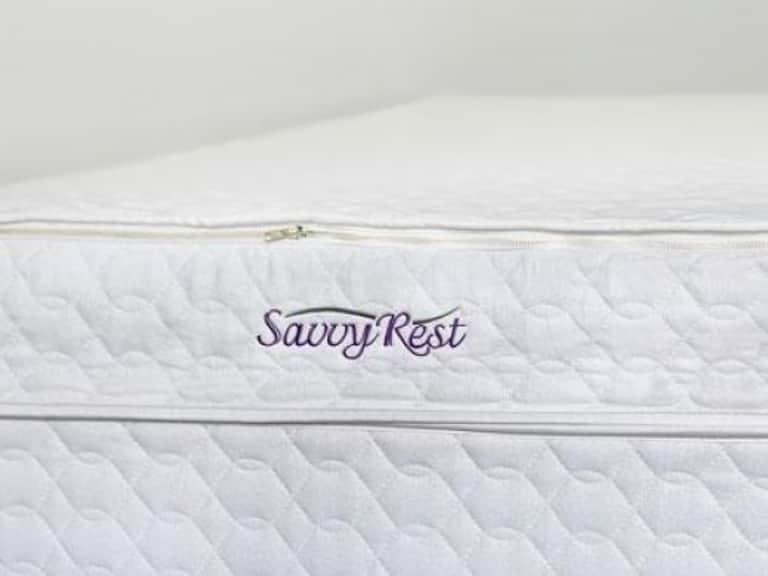
The Savvy Rest Tranquility Latex Mattress illustrates how a mattress can use more than one latex layer and offer choices in the material configuration. Its listed construction includes two three-inch layers, with options for Dunlop latex, Talalay latex, or a combination. The product information also describes an organic cotton cover and a wool flame barrier. These details make it a useful example for understanding how layer count and material selection are presented; they do not establish that it will suit every sleeper.
The example also highlights why total thickness and intended use matter. A seven-inch mattress with two layers is a different construction from a taller mattress with a deeper comfort system or a coil support core. Buyers should compare the full specifications, including layer firmness, overall thickness, support requirements, and care instructions. Where a mattress has a stated weight recommendation or other use guidance, read it carefully and confirm current details with the manufacturer.
Temperature, breathability, and the sleep environment
Latex is often described as breathable, but temperature comfort is influenced by more than the foam itself. The cover, quilted materials, bed sheets, room conditions, humidity, and a sleeper’s own heat regulation all contribute. Some sleepers may find a latex mattress less enveloping than a close-contouring foam, which can affect how warm it feels. Still, no single material guarantees a cool night in every room or for every person.
Natural fibers used in covers or surrounding layers can also change how moisture and heat are managed at the surface. Wool and cotton, for example, have different properties from synthetic fabrics, and their performance depends on the specific construction. A protector can affect airflow and surface feel as well. When temperature is a concern, consider the entire bed system and bedroom environment rather than relying on a material’s reputation alone.
A careful way to evaluate a latex mattress
Descriptions such as “medium,” “supportive,” and “pressure relieving” can orient a comparison, but they are not substitutes for firsthand testing. If possible, lie on a mattress in your usual sleep position for long enough to notice whether pressure develops. Try changing positions, and pay attention to how quickly the surface responds. A brief sit on the edge will not reveal how the mattress feels through a full night.
- Check the layer details. Look for the number and thickness of layers, the latex type, and any available firmness information.
- Consider the whole construction. The cover, comfort layers, support core, and foundation work together to create the feel.
- Think about your sleep habits. Your usual positions, tendency to turn, and comfort preferences can guide what you test.
- Read care and warranty terms. Covers and latex layers may have specific handling instructions; do not assume a cover is machine washable.
- Confirm fit and support requirements. Check mattress dimensions, base compatibility, and any stated limitations before making a decision.
For couples, each person’s experience deserves attention. Different body weights and sleep positions can create different needs on the same surface. A split or customizable design may help in some circumstances, but shoppers should verify exactly what can be adjusted and whether changes affect both sides or only one. Terms such as “customizable” can refer to specific components, so the details matter.
Common misconceptions about latex
One frequent misconception is that natural latex always feels soft. In practice, latex can be made in different firmness levels, and a naturally sourced material can still feel quite firm depending on its formulation and construction. Another is that latex automatically suits every sleeping position. Its responsiveness is a recognizable characteristic, but comfort depends on the match between the sleeper and the complete mattress.
It is also easy to assume that a thicker mattress must provide better support. Thickness can change how a mattress cushions and how its layers interact, but it does not independently measure quality or suitability. A well-designed thinner mattress may work for a particular sleeper, while a thicker one may feel wrong. Compare construction and personal fit rather than treating height as a shortcut.
Finally, material origin and sleep performance are separate questions. A preference for natural materials may guide a shopper’s search, but it does not predict firmness, pressure relief, durability, or temperature comfort on its own. Those qualities depend on design and use. Clear specifications, transparent care guidance, and a realistic trial or exchange policy can help readers evaluate a mattress more thoughtfully.
The feel is a relationship, not a label
Latex’s defining quality is its lively response: it compresses under load and rebounds as the body moves. That can create a buoyant sleep feel, make position changes seem easier, and provide cushioning without the same slow, enveloping response associated with some memory foams. But the character of the bed emerges from the interaction of layers, firmness, thickness, cover, support base, and sleeper.
When exploring latex, focus less on finding a universally “best” material and more on understanding what your body needs from a sleep surface. Notice where pressure gathers, how stable you feel, and whether the mattress lets you move comfortably. With those observations in mind, construction details become more than technical language: they become clues to how a mattress may behave beneath you.
Frequently asked questions
Does latex feel like memory foam?
Usually, the response differs. Latex typically rebounds more quickly and may feel buoyant, while memory foam often conforms more gradually and closely. Specific products vary, and the complete mattress construction influences the comparison.
Is natural latex always firm?
No. Latex layers are made in different firmness levels. The feel also depends on layer thickness, the materials beneath them, and the sleeper’s body and preferences.
Can latex work for side sleeping?
It can, if the mattress allows enough cushioning at the shoulder and hip while maintaining a comfortable, stable feel. Side sleepers should assess pressure relief and alignment on the specific mattress rather than relying on the material name alone.
Does latex make it easier to change positions?
Its quick recovery may make movement feel easier than on some slower-response foams. Whether that difference matters depends on the sleeper and on the mattress as a whole.
What should I compare when looking at latex layers?
Review layer thickness, firmness options, latex type, cover materials, total mattress height, support construction, care requirements, and any stated use guidance. If possible, test the mattress in your usual sleep positions.